A home can be beautiful and, in ways you never see, work against the people who live in it. Here is where beauty and health can quietly diverge, and how good design brings them back together.
For more than 20 years, I've designed beautiful interiors. The way a room looks, the way light falls across it, the way it feels to come home to, all of that matters to me, and it always will. But in the last two decades in exceptional homes, I've learned something else, too. That a room can be flawless to the eye and, quietly, work against the person living in it.
Picture a living room you would photograph, or have already seen in the pages of a magazine. A sculptural sofa. A glass and metal coffee table. Marble underfoot and covering the kitchen island. A row of sculptural pendants overhead. It is beautiful. It may also be releasing formaldehyde from the sofa's frame and foam, bouncing sound around until the room is subtly tiring to sit in, and lighting everyone in it with a spectrum that tells their bodies it is still midday when it's actually ten at night.
None of that shows up in a photograph, and that's the whole problem. We have been taught to judge a home almost entirely by how it looks, because looks are the part we can see. The rest, the part that actually shapes how we sleep, breathe and feel, stays invisible until it starts to cost us our energy, our mood and our healthspan.
Where a beautiful home and a healthy one can diverge
The materials.
A gorgeous sofa can be built on a particleboard frame, filled with polyurethane foam and wrapped in a treated fabric. Each of these can release formaldehyde and other volatile organic compounds into the air you breathe at home (wrinkle-resistant finishes can contain formaldehyde; stain-repellent ones often rely on PFAS). VOCs are recognised indoor-air pollutants; formaldehyde is classified as carcinogenic to humans by the WHO's cancer agency, the IARC. The off-gassing is strongest in the first months and eases over time, but can continue for months or even years. Beautiful, and off-gassing. The look of a piece, and even its price tag, tells you nothing about what it’s made of.
The surfaces.
Hard, reflective materials like stone, glass and large planes of lacquer are some of the most striking in design. They also send sound bouncing around a room through reverberation, raising its noise level. The World Health Organization recognises chronic environmental noise as a real burden on health. How much a mildly noisy room costs you over years is better described as supported than precisely settled, but the direction is not in doubt. Used everywhere, the same materials that make a room look calm can make it feel anything but.
The light.
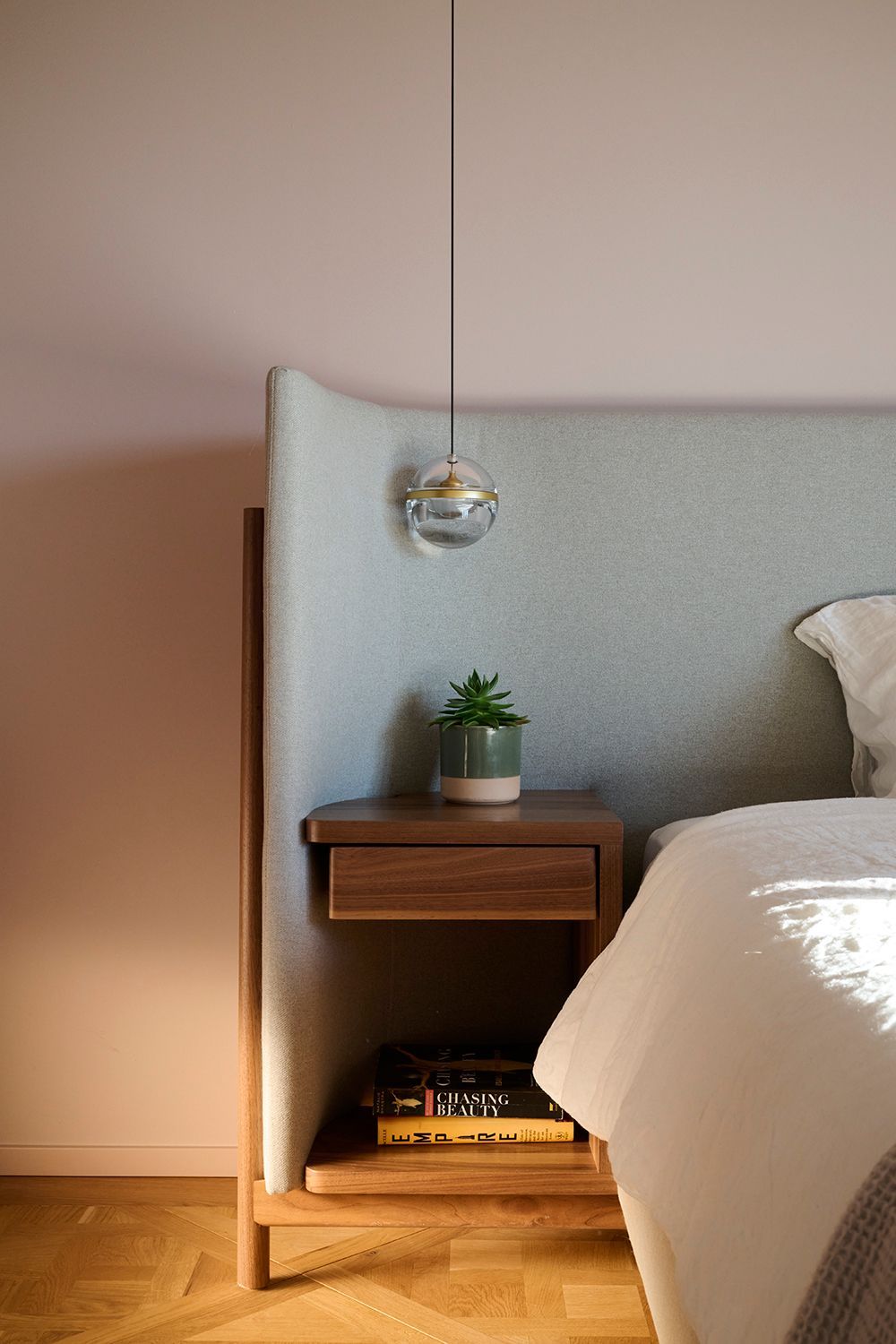
Statement lighting is often chosen for how the fixture looks, not for the light it casts. Yet we have known since the early 2000s that blue-wavelength light in the evening suppresses melatonin and pushes the body clock later. Even warm-white LEDs keep a blue peak in their spectrum, so in the evening what matters most is keeping light low and warm. Lighting a home as brightly at night as during the day works quietly against everyone's sleep. The most beautiful fixture in the room can be the least kind to the body.
You don't have to choose
Here's the thing, beauty and health are not opponents. A sofa can be beautiful and made of materials that don't pollute your air. A room can be both quiet and stunning at once. Light can be flattering and still respect your body clock. These goals only collide when health is treated as an afterthought, bolted on at the end. When it is there from the first sketch, the two simply become one brief.
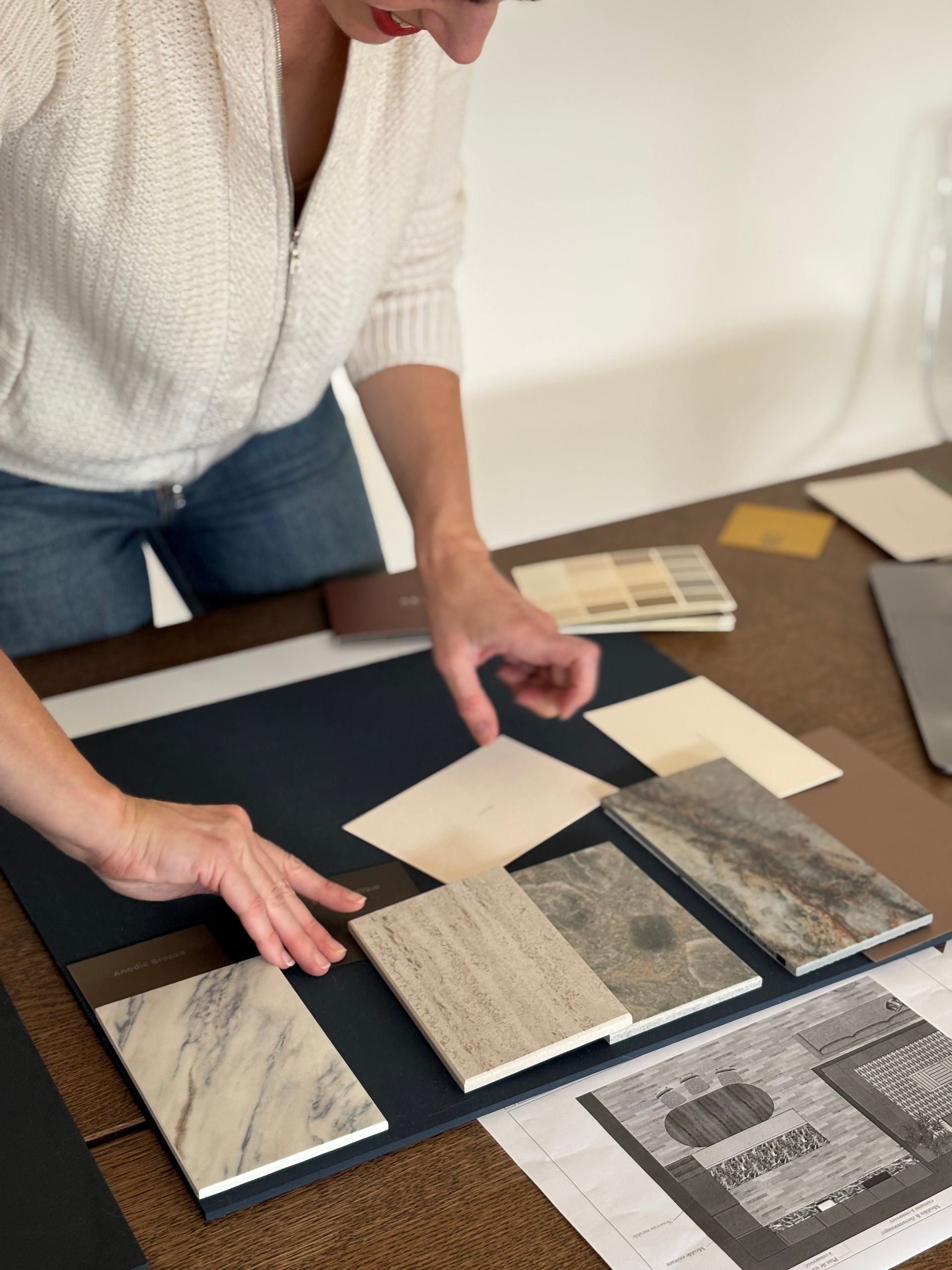
That is how I work. Before I design, I spend time in the home you already have, during an in-person Longevity Audit, where, alongside discussing your needs, your current pain points and your aspirations for the home, I measure the things you can't see: the air, the light, the sound, the water. Then the design follows, holding beauty and health in the same hand. The result doesn't look like a compromise. It looks like a beautiful home that also, behind the scenes, takes care of the people in it.
Where you can start right now
You can begin to read your own home this way today. Look at your largest pieces of furniture and ask what they are actually made of. Notice whether a room echoes when you clap your hands. Check your thermostat: is your bedroom the same temperature as the rest of your home, or cooler? Using the slow-motion video mode on your phone, film your lights: do you see them flicker? In the evening, notice whether your lighting is as bright as it is during the day. None of this means tearing anything out. It means seeing the invisible layer that a beautiful photograph will never show you.
A reminder
Beauty is not the enemy of a healthy home. It is half of it. The other half is everything you don't see, working for you or against you while you live your life. The best homes I know are the ones where you never have to notice the second half, because it was designed in from the start.
So here is the question worth sitting with. Your home, the one you love the look of: is it as good to you as it is to look at?