The kitchen is where your health is quietly decided every day: what you eat, the air you breathe, the water you drink, and whether the people you love gather around you. Designed well, it becomes one of the most powerful health interventions in the whole home.
We tend to think of the kitchen as the room where design shows off: the cabinetry, the stone, the beautiful hardware. It is all of that, and kitchens are one of my favorite spaces to design. But it is also one of the two rooms – together with the bedroom – where more of your current and future health is decided than anywhere else. What you eat begins here. So does the air you breathe, the water you drink, and, more than we like to admit, whether the people you love end up gathered around you or not. Of all the rooms in your home, the kitchen is the one where good design does the most for how well you live, and how well you age.
The air you cook in
Cooking is one of the largest sources of pollution inside a home. Searing, frying and grilling release fine particles (PM2.5), and gas burners add nitrogen dioxide, straight into the air you breathe, which is why a powerful hood that vents outdoors, rather than one that filters and recirculates, matters more than almost any other appliance. For passionate cooks, it is the single most important, and most overlooked, health decision in a kitchen.
The materials you prepare on
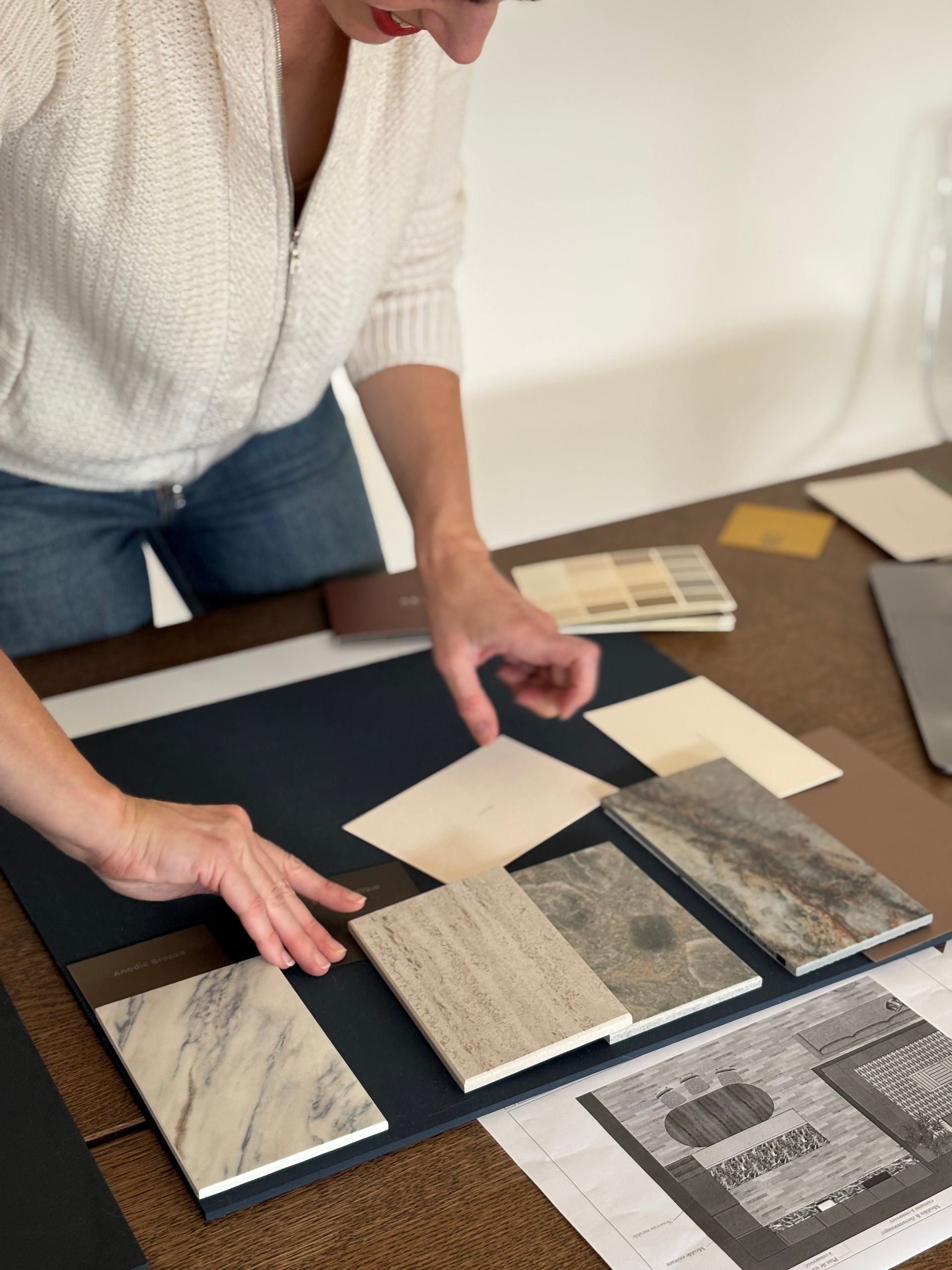
Then there is the cabinetry, which is often one of the largest amounts of manufactured material in the home. Most cabinetry is made with particleboard and MDF, which are bound with formaldehyde-based resins that off-gas over time. Formaldehyde is a recognised indoor-air pollutant. Then there’s the question of the cabinet surface, or veneer, and the glue used to attach it to the panel, both of which can also contain formaldehyde and other VOCs. Many kitchens today are open to the living area, meaning that the off-gassing of the cabinetry impacts the air in your entire home. Healthier options exist, but the decision to use them has to be made early in the design process.
The water you drink
Swiss tap water is of excellent quality, but it still isn't perfect. Some trace contaminants and pharmaceutical residues pass through treatment, and the pipes between the plant and your glass have their say too. So filtration here is a marginal gain rather than a must-have, and I'd test your water before deciding anything. Where it makes sense, a (remineralized) reverse-osmosis tap integrated into the design, with still and sparkling water on demand, is the kind of upgrade that quietly earns its place at a sink you use twenty times a day.
The kitchen that makes the healthy choice the easy one
Nutrition is a design question long before it is a willpower question. A kitchen with generous, well-lit prep space makes cooking from scratch a pleasure rather than a chore. Storage that keeps everyday ingredients within reach, and a bowl of fruit within arm’s reach, does more for how a household eats than any resolution. None of this is dramatic science; it is simply designing so that the easy thing and the good thing become the same thing. Over years, that is where a kitchen earns its keep.
The most underrated ingredient: people
Decades of research place the strength of our social connections among the more powerful predictors of how long, and how well, we live. That belongs in a conversation about kitchens, because today the kitchen is where a household actually gathers. A layout that lets someone sit at the island with a drink while you cook, or lets two people work side by side without colliding, is doing quiet work for your health, not just for your evenings. I design kitchens to pull people in, not to keep the cook alone.
The same room also has to age with you. Drawers instead of low cupboards, pull-down shelves in upper cabinets, good task lighting, a place to sit, a dishwasher placed higher so you don’t have to bend: small decisions, made now, keep a kitchen easy and safe to use as mobility inevitably changes. Longevity design is as much about the next thirty years as the next dinner party.
How I design a kitchen for health
It starts, as always, with an in-person Longevity Audit. I measure the things you can't see, the air and the water, and I observe how you actually live in the room: how you cook, who joins you, where the light falls, what frustrates you today. Then the design follows, blending health, functionality and aesthetics: the ventilation and the materials and the water, yes, but also the layout, the finishes and the feeling of the room. The result should be a kitchen you find beautiful and want to spend time in. The health is simply built in, where you never have to think about it.
Where you can start right now
You don't need a renovation to begin. Run your hood while you cook, and for a few minutes after you’ve finished. Find out whether it vents outside or merely recirculates, because that one fact changes everything. Crack a window while you sear. Look at what your cabinets and countertops are actually made of. Keep the fruit where you'll see it, and the treats where you won't. And before buying any water filter, have your tap water tested, so you're solving a real problem rather than an imagined one.
A reminder
The kitchen is the most-used room in most homes, and the one where design touches your health most directly, several times a day. It shapes what you eat, what you breathe, what you drink, and who you share it all with. That is a lot of quiet influence for one room, and it is almost entirely designable.
So here is the question worth sitting with. Is your kitchen feeding your health, or just your appetite?