It's the question people ask once they've understood what I do: is it more expensive than a standard renovation? The honest answer is yes. Public guides put a home renovation in Switzerland in 2026 at somewhere between 1,000 and 3,000 CHF/m². Since those ranges cover everything from a repaint to a full transformation, they understate what a complete renovation really costs per square meter. A longevity-focused renovation starts at approximately 6,500 CHF/m². The difference, and the final cost of any specific project, comes down to four factors: the quality of the materials, the quality of the craftsmanship, the extent of the work, and the systems installed. Here is where the money actually goes, and why a home that supports your health is still the better long-term investment.
First, the materials
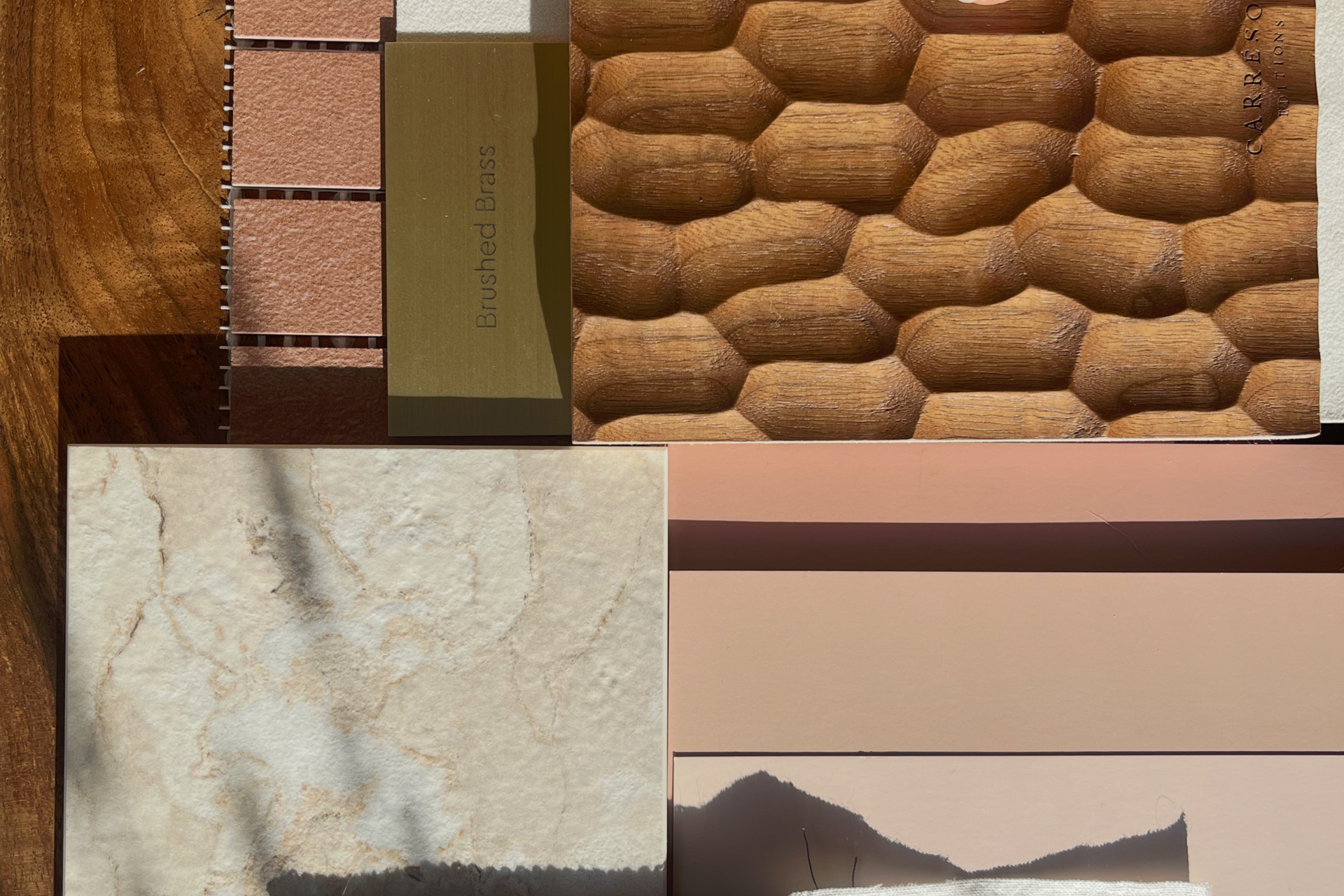
As with food or bedding, the healthier building materials are usually the more expensive ones. A quality mineral or bio-based paint costs more per liter than a basic acrylic, though the gap narrows once labor is counted, since the painter's hours are the same. Natural insulation such as wood fiber, hemp or sheep's wool costs roughly two to three times the price of glass wool per square meter of material. Clay boards cost about three times as much as standard plasterboard. Particle board with no added formaldehyde costs more than standard MDF, and solid wood more still. The same is true of finishes: a UV-cured lacquer costs more than a standard one, and engineered stone or solid stainless steel ask more than resin or laminate. Flicker-free, dimmable, automation-ready lighting costs more than the standard option too.
Second, the craftsmanship
This is partly dictated by the materials, since not every plasterer knows how to fit clay boards or apply a lime finish, and partly by the standard of finish that clients making an investment of this scale rightly expect.
In Switzerland we are fortunate to have highly competent, detail-minded and reliable craftspeople in every trade, and their work makes all the difference to the result: to how it looks, how long it lasts and what it is worth. But as with a leading surgeon or a top coach, that expertise costs more than the painter who leaves your walls uneven and your skirting boards flecked, on the days he turns up.
Third, the extent of the work
This is where a longevity-focused renovation truly parts ways with a standard one. It rethinks the home completely, from the beginning: the layout, built-in storage, acoustic insulation, heating, ventilation, home automation and security. The bulk of the investment goes into elements that are invisible yet decisive for your comfort and enjoyment of the space over decades. A standard renovation takes almost none of this into account and concentrates on what shows, which is exactly why infrastructure is so much more expensive to add later.
Fourth, the systems
The systems vary the most from one project to another, depending on what the Longevity Audit shows is needed and what the building allows:
- Ventilation that maintains a constant flow of clean, humidity-regulated air.
- Acoustic insulation in the partition walls that matter, acoustic underlay beneath the floors, and windows chosen for their sound rating as much as their thermal one.
- Heating by zone, where the home doesn't already have it.
- Automation that regulates temperature, blinds and solar shading, and dimmable, flicker-free lighting.
- Water filtration, at the kitchen tap or at the point of entry.
A standard renovation may include motorized blinds and zoned heating. It most often overlooks the rest.
The return on investment
Three arguments: two financial, one personal.
The first is resale value. The Global Wellness Institute's 2025 report on wellness real estate reviewed several hundred studies and found that wellness-focused homes at the middle and upper ends of the market command a price premium of between 10 and 25 percent. The same report puts the global wellness real estate market at around 584 billion dollars in 2024 after growing about 20% a year since 2019, and forecasts that it will roughly double, to 1.1 trillion, by 2029. The largest markets today are North America and Asia; Europe comes third and is growing fast. In Switzerland, homes designed this way are still rare. Being early in a market that grows like this has historically been a good place to stand. I'll be careful here: a premium measured across a global market is not a promise about your building. But it is a clear signal of where demand is going.
The second is the longer view, in which one longevity-focused renovation today starts to look equal to, or cheaper than, a succession of standard ones. The expensive project is not the one that includes ventilation. It's the one that adds it afterwards. Almost everything in the third and fourth factors lives inside the walls, floors and ceilings. Decided at the plan stage, they are lines in the quote. Decided after the plaster is on, they are a second renovation. The same goes for the small things: a socket that isn't where the bedside lamp needs it, a bedroom that should have been on the other side of the corridor. Longevity design is cheaper than it looks for one reason above all: it is decided once.
The personal argument is the one I find most convincing, and it's the other meaning of the word longevity. A home built with solid materials, proper systems and a plan for how your life will change is a home that doesn't need redoing in ten years. Switzerland keeps what still works. A renovation that lasts thirty years costs less per year than two that last fifteen, whatever the initial quote says. And the years in between are spent sleeping better, breathing cleaner air, and living in a home designed for the person you'll be at seventy as much as the person you are now.
I won't put a monetary value on thirty years of better sleep and cleaner air. The research is clear about the direction and honest about the size; I'll leave the arithmetic to you.
If the budget is fixed
Don't spread it thin. Put it into the elements that make the biggest long-term difference in your particular home and are the hardest or most expensive to add later: the optimized layout; ventilation and kitchen extraction; water filtration, where needed; zoned heating; additional acoustic insulation; a wired home automation system with blackout blinds; circadian-aligned, flicker-free, dimmable lighting; bio-based paint.
The furniture can be upgraded later. The ducts can't.
Where to start
Every project I take on begins with a Longevity Audit: I come to your home, measure the light, the air, the water, the noise, the temperature and the humidity, and give you a clear, prioritized report. It tells you what your home is doing for you today, and what a renovation could change. The fee is credited against your project if you go ahead. Based in Lausanne, I work in Geneva and across French-speaking Switzerland, in French, English and Mandarin.